





Table of contents:
- The generic ceiling fan data sheet: a stopgap solution?
- What is dynamic LCA, and why is it important for the carbon impact of the Samarat?
- What is the carbon impact of the different versions of the Samarat?
- Which phases are included in the LCA?
- PEP ECOPASSPORT declaration: beyond carbon
- Product category rules: what are they?
- Access the Samarat PEP ECOPASSPORT declarations!
The generic ceiling fan data sheet: a stopgap solution?
At the time of the implementation of RE2020, the French Ministry of Ecological Transition created a Default Environmental Declaration (DED), which makes it possible to include ceiling fans in new construction projects.
Life Cycle Assessment (LCA) specialists noted at the time that this datasheet was not particularly favorable: with 136 kg CO2eq[i], ceiling fans were not especially valued in terms of carbon impact.
For reference, this datasheet is available here.
As of March 2025, the Samarat is the very first branded ceiling fan to obtain its PEP ECOPASSPORT declaration (Product Environmental Profile) and have it published on the INIES database.
What is dynamic LCA, and why is it important for the carbon impact of the Samarat?
To compare products that do not have the same lifespan or performance, it is necessary to rely on a key concept: dynamic LCA[ii]. With this approach, greenhouse gas (GHG) emissions are weighted over time. Thus, an emission occurring at the beginning of the life cycle has a greater impact than a later emission.
Indeed, static LCA, based on the simple aggregation of data appearing in the declarations, compares data of different nature and duration: for example, the Ministry of Ecological Transition’s DED is based on a Reference Service Life (RSL) of 15 years, whereas the Samarat PEP ECOPASSPORT declarations consider an RSL of 17 years.
A building is considered to have a lifespan of fifty years (in a regulatory RE2020 LCA). Dynamic LCA applies a coefficient that decreases each year, from the origin (100%) down to 50 years (57.8%).
The following carbon impacts are taken into account, including all intermediate transport phases:
- Raw material extraction
- Manufacturing
- Distribution
- Installation
- End of life
- Recycling, reuse, repurposing…
The use phase is treated separately, as explained below.

Figure 1: LCA stages
What is the carbon impact of the different versions of the Samarat?
Over the 50-year lifespan of the building, several replacements will take place to account for the service life of the ceiling fan itself. The dynamic LCA calculation applied under RE2020 results in a total carbon impact of 383 kg CO2eq for the Ministry of Ecological Transition’s DED. On an average annual basis over the full assessment period, this represents 7.7 kg CO2eq for this ceiling fan[iii].
On the same basis, the Samarat without LED results in a total of 77 kg CO2eq, corresponding to 1.5 kg CO2eq on an average annual basis.
As for the Samarat with LED (combining both PEP ECOPASSPORT declarations), the total impact is 142 kg CO2eq, i.e. 2.8 kg CO2eq on an average annual basis.
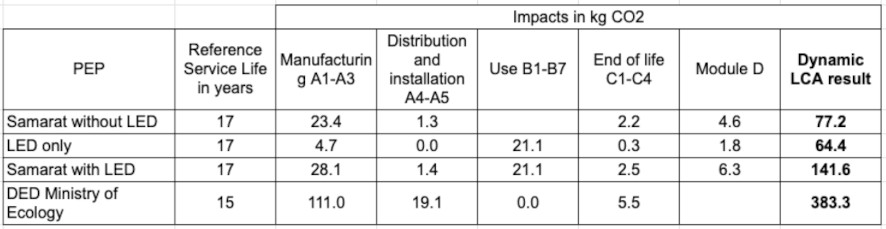
Figure 2: Dynamic LCA results
For informational purposes, below are the results from a static LCA (raw data taken from the PEP ECOPASSPORT declarations):
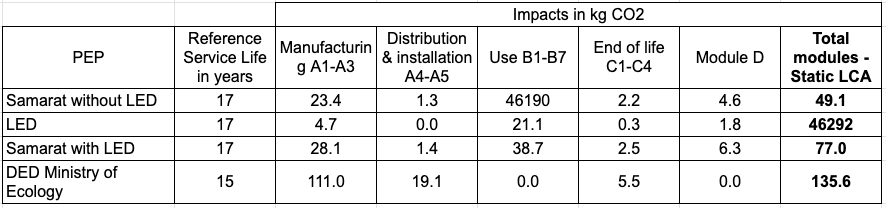
Figure 3: Static LCA totals
Thus, in dynamic LCA, the Samarat emits almost 5 times less CO2 over the regulatory lifespan of a building than the default ceiling fan presented on the INIES database!
However, as explained below, impacts related to the use phase (module B) are considered null in the Ministry’s DED, which gives it a significant advantage in both dynamic and static LCA totals!
RE2020 carbon thresholds are becoming increasingly stringent as of 2025, and will be further tightened in 2028 and 2031[iv]. In this context, providing low-emission equipment to project owners becomes a key challenge, contributing to the overall economic balance of a project.
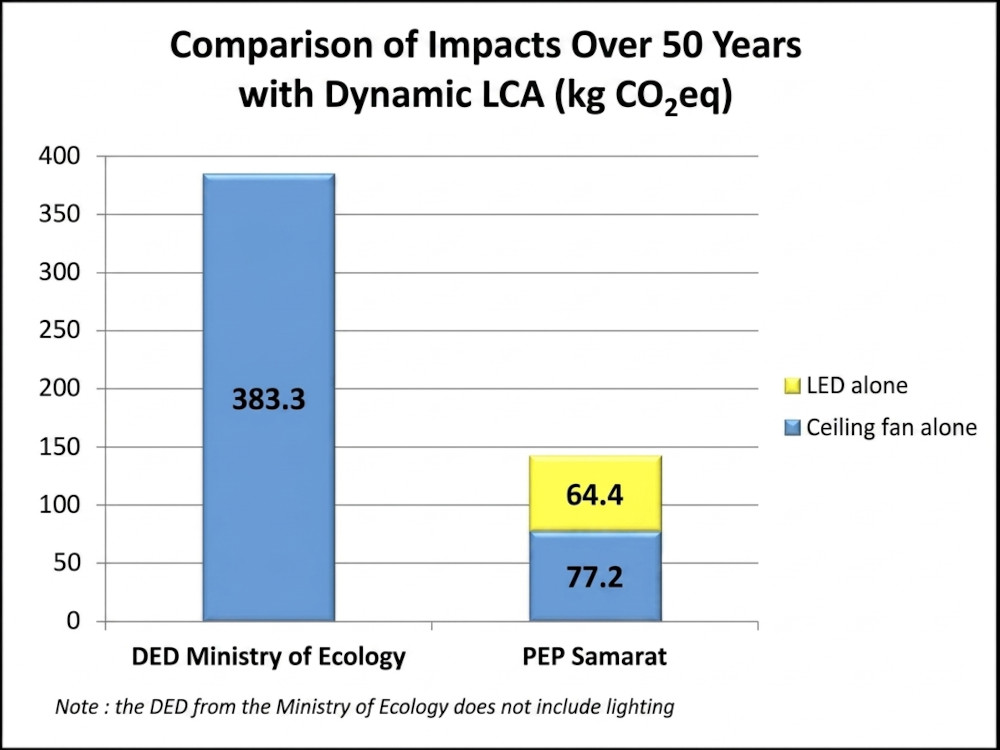
Figure 4: Comparison of carbon impacts over a building’s lifespan
Which phases are included in the LCA?
The diagram below shows the life cycle assessment stages used in PEP ECOPASSPORT declarations.
Four main blocks, referred to as “modules,” are used to precisely quantify the environmental impacts of products: Modules A, B, C, and D.
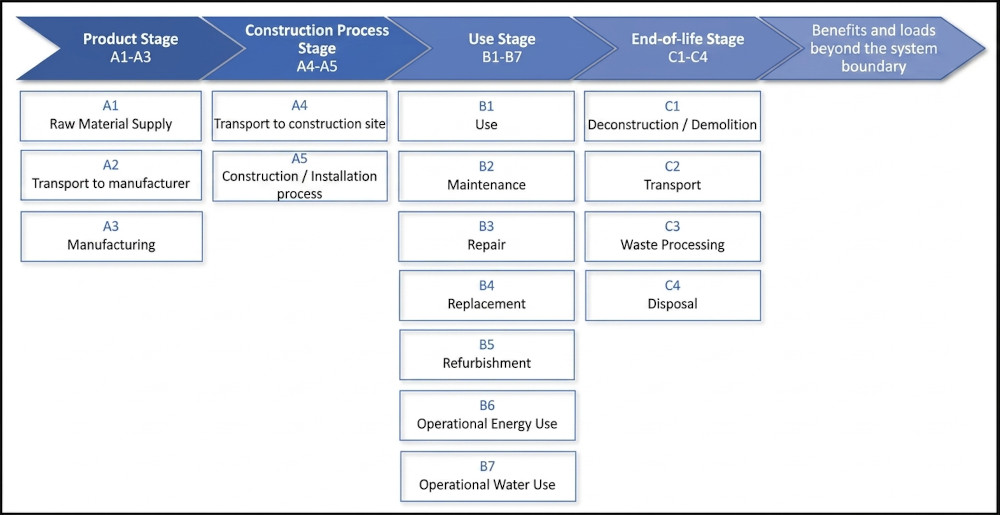
Figure 5: Overview of life cycle assessment modules, source INIES
As shown, Module B covers the impacts related to the use phase. The table below summarizes the elements included in the sub-modules that make up Module B.
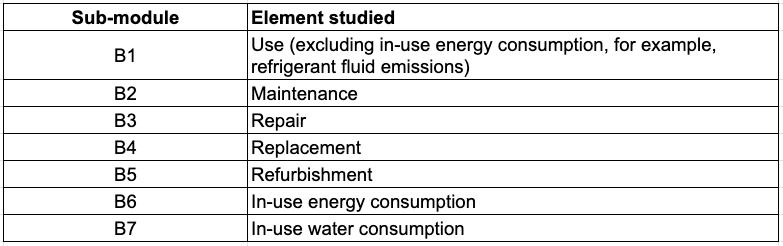
Figure 6: Sub-elements of Module B
In regulatory LCA, Module B6, which represents most of the use phase, is not included in the IC Construction indicator[v]. It is not derived from the PEP ECOPASSPORT datasheet data. Instead, it comes from the RE2020 energy calculation and is converted according to the CO2 intensity of the French electricity mix; it is included in the IC Energy indicator[vi].
It should be noted that in the Ministry of Ecological Transition’s DED, the Module B is assigned a zero value, which is not the case in the Samarat PEP ECOPASSPORT declarations. The environmental performance of the Samarat is therefore even stronger than what is shown by dynamic LCA calculations!
Finally, Module D covers impacts beyond the end of life of a product:
- for example, recycling materials makes it possible to produce new products, avoiding the extraction and refining of raw materials,
- on the other hand, in the case of energy recovery (burning plastic to produce energy), greenhouse gas emissions may be higher than the benefits of the energy produced.
PEP ECOPASSPORT declaration: beyond carbon
The PEP ECOPASSPORT declaration covers all environmental aspects of equipment, mainly electrical, electronic, and technical devices.
Construction materials, on the other hand, are characterized by Environmental and Health Product Declarations (FDES).
In both cases, products are assessed through LCA that addresses, in addition to carbon and climate change impact, the contribution of products to around 30 environmental indicators, including among others:
- Ozone layer depletion (CFCs)
- Ocean acidification
- Aquatic and terrestrial eutrophication (phosphates)
- Depletion of mineral, metal, and fossil resources
- Particulate matter emissions
- Human health impacts
- Waste generation, hazardous or non-hazardous
- Etc.

The PEP ECOPASSPORT declarations list these environmental criteria beyond CO2, and they are calculated by LCA software. However, they are not regulatory indicators under RE2020.
As such, water-related impacts must also be reported. They are calculated for informational purposes, but do not affect the regulatory indicators that must currently be met.
Product Category Rules: what are they?
PSR (Product Specific Rules) are sets of rules that define references or internal comparison elements for different product families.
These documents are generally established by professional associations in cooperation with the PEP-Ecopassport organization.
For example, PSR-0008 defines the specific rules for ventilation equipment, air handling, filtration systems, or mechanical smoke extraction systems.

Figure 7: Cover of a Product Specific Rules (PSR) document
For each product, the specific rules define “functional units” and “declared units.”
The functional unit is based on the service or function provided by the product; it enables comparison between products within the same family. It uses a reference value.
For example, the functional unit for ventilation systems is as follows:
“Ensure an air flow transfer of 1 m3/h, for ventilation and/or air treatment and/or smoke extraction and/or filtration of a building over a reference service life of X years.”
The declared unit for the same systems is shown below. It is based on the purely descriptive characteristics of the product:
“Provide ventilation and/or air treatment and/or smoke extraction and/or filtration of a building using a xxx [insert considered system] with a nominal airflow of xx m3/h for a service life of X years.”
In the first case, performance can be compared (see the 1 m3/h value), whereas in the second case, only the technical characteristics of the equipment are described.
The PSRs also define a framework for LCA scenarios, from manufacturing to end of life.
For ceiling fans, no PSR exists to date.
However, the functional unit (FU) and declared unit (DU) have been defined:
- FU: Provide an air movement of 1 m3/s, over a reference service life of 17 years, in order to cool the occupants’ skin.
- DU: Provide an air movement of 2.23 m3/s, over a reference service life of 17 years, in order to cool the occupants’ skin.
A PCR pending the PSR
Like most pioneering products that do not yet have PSRs, the Samarat falls within the broader framework of PCR (Product Category Rules).
The PCR provides a standardized methodological basis to ensure that PEP declarations from different manufacturers or corresponding to different equipment remain comparable and consistent.
Access the Samarat PEP ECOPASSPORT declarations!
The different Samarat PEP ECOPASSPORT declarations are now available in the Professional Area.
They can also be consulted in the INIES database.
To access them, simply go to the INIES database (https://base-inies.fr/consultation/recherche-fdes) and type “ceiling fan” in the “keywords” field, as shown below.
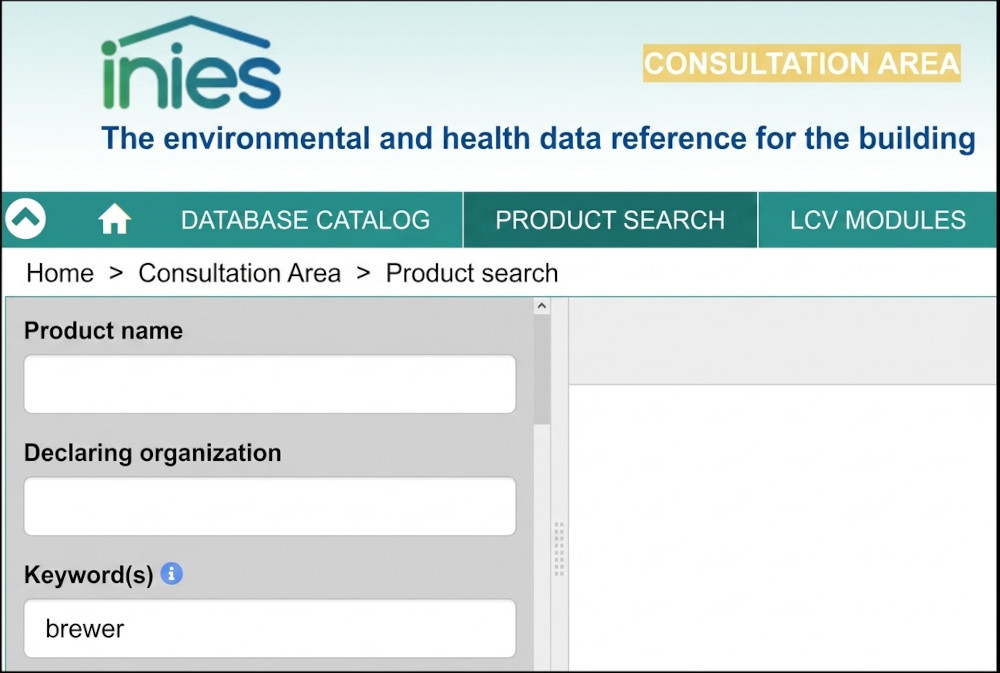
Figure 8: Access to data in the INIES database
The PEP ECOPASSPORT declarations available in the Professional Area apply to the entire Samarat range. Thus, the reduced impact of the thermostat on the LCA balance means that the relevant Samarat models are considered equivalent to a standard Samarat without LED.
In contrast, devices that do not benefit from these PEP declarations (Exhale, Izyfan) continue to refer to the Ministry of Ecological Transition’s DED.
Note: the Samarat PEP ECOPASSPORT declarations were prepared by the consulting firm New Eco-Conception, which kindly reviewed this article.
[i] Carbon impacts are reported in kg of CO2 equivalent.
[ii] See also the CEREMA article below: https://www.cerema.fr/fr/actualites/reglementation-environnementale-2020-quelles-definitions#toc-presentation-de-la-methode-de-calcul-dynamique
[iii] 383 kg CO2eq / 50 years = 7.7 kg CO2eq / year
[iv] We are currently drafting a dedicated article that will be published soon. All subscribers to the professional area will be informed of its release.
[v] The Construction Carbon Indicator (IC Construction) measures the carbon impact of materials and processes used during the construction phase.
[vi] The Energy Carbon Indicator (IC Energy) relates to the carbon impact of the building’s operational energy consumption.